Supply Chain Visibility: Why Real-Time Tracking Matters
November 19, 2025
In today’s hyper-connected global economy, supply chains are under tremendous pressure to operate with precision, speed, and transparency. Businesses ship more frequently, customer expectations for delivery accuracy are higher than ever, and competition rewards companies that can move goods efficiently and predictably. With this shift, supply chain visibility has become a critical differentiator — and at the heart of modern visibility lies real-time tracking.
Introduction
Real-time tracking provides immediate, continuous insight into the location, status, and condition of shipments. It eliminates the “black box” effect that traditionally plagued logistics, where shippers were left guessing between dispatch and delivery. Instead, they receive live updates and actionable data that supports faster decision-making, risk mitigation, and improved customer service.
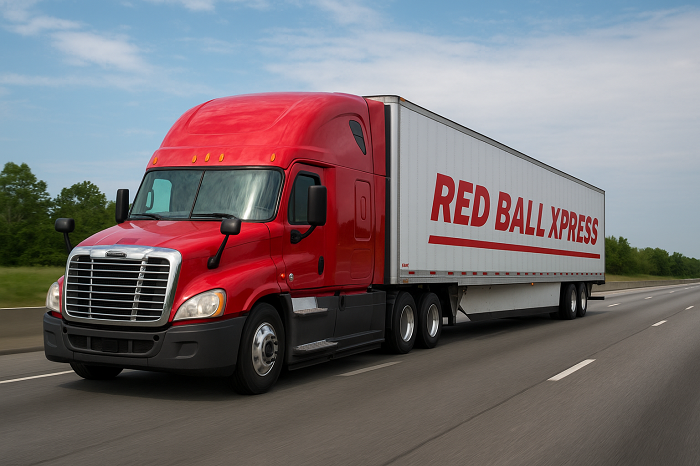
Companies like RedBall Express LLC have embraced this technology, offering tracking systems that enhance shipment security, provide high-resolution transparency, and empower shippers with tools that make logistics less reactive and more strategic. This article explores the importance of real-time tracking, the specific benefits for shippers, how RedBall Express LLC ensures safety and visibility, and the tools and technologies that make all of this possible.
Why Real-Time Tracking Matters in Supply Chain Visibility
Supply chain visibility refers to the ability to monitor and track products in transit at every stage of their journey. Historically, visibility relied heavily on manual updates, phone calls, paper documents, and systems that only updated at checkpoints. This meant delays in information, limited control, and slow responses to disruptions.

Real-time tracking changes this landscape by enabling:
-
Live location monitoring
-
Instant alerts
-
Status updates without human input
-
Proactive identification of disruptions
-
Accurate arrival predictions (ETA)
In short, real-time visibility transforms supply chains from reactive to predictive.
1. Eliminating Uncertainty
One of the biggest frustrations for shippers is not knowing where a shipment is or when it will arrive. Real-time tracking provides precise, minute-to-minute updates, eliminating uncertainty and supporting better planning downstream — including staffing, inventory control, and distribution.
2. Increasing Accountability Across the Network
Real-time tracking creates a digital footprint that logs every movement and status change. This transparency encourages professionalism, reduces fraud, and ensures all stakeholders — from drivers to carriers to distribution centers — are aligned.
3. Supporting Faster, Data-Driven Decisions
When disruptions occur — traffic jams, mechanical issues, route changes, weather delays — having live data allows shippers to respond immediately. Real-time visibility helps reduce the impact of unforeseen events and enables companies to develop smarter contingency plans.
Benefits of Real-Time Shipment Tracking for Shippers
Real-time tracking is not merely a convenience — it delivers measurable operational, financial, and customer-experience benefits.
1. Reduced Delays and Improved On-Time Delivery Performance
With real-time data, shippers can make quick adjustments when issues arise. For example:
-
Rerouting vehicles around accidents
-
Informing customers of new ETAs
-
Scheduling warehouse teams more efficiently
This leads to improved consistency and significantly fewer late deliveries.
2. Lower Operational Costs
Many logistical inefficiencies — idle time, excessive manual communication, inventory misallocation — stem from poor visibility. Real-time tracking reduces wasted resources by:
-
Minimizing detention and demurrage fees
-
Avoiding costly miscommunications
-
Reducing unnecessary mileage
-
Lowering inventory carrying costs by enabling just-in-time management
Savings accumulate quickly across high-volume shipping operations.
3. Enhanced Customer Satisfaction
Today’s customers expect delivery visibility not just as a bonus but as a standard. Real-time tracking helps shippers provide:
-
Reliable delivery estimates
-
Live tracking links
-
Transparent communication
-
Proactive issue resolution
This leads to higher trust, fewer complaints, and stronger customer relationships.
4. Stronger Security and Loss Prevention
Cargo theft and tampering remain major industry challenges. Real-time tracking allows shippers to:
-
Monitor unauthorized stops
-
Receive alerts if a route deviates
-
Track tamper sensors
-
Identify exactly where a loss or security breach occurred
The ability to respond instantly reduces both the frequency and severity of incidents.
5. Better Compliance and Documentation
Tracking systems help companies comply with labor laws, cross-border regulations, and industry-specific requirements. Automated logs simplify:
-
Hours-of-service (HOS) monitoring
-
Customs documentation
-
Proof of delivery
-
Chain-of-custody records
Advanced systems store historical data that can be quickly accessed for audits and customer reporting.
6. More Efficient Resource and Fleet Management
Real-time tracking systems often integrate fuel usage, driver behavior monitoring, maintenance alerts, and routing optimization. This enables shippers to improve:
-
Fleet efficiency
-
Fuel consumption
-
Driver safety
-
Vehicle maintenance scheduling
Together, these optimizations drive down costs and increase profitability.
How Red Ball Xpress Ensures Package Security & Transparency

Red Ball Xpress has positioned itself as a leader in secure, transparent logistics by implementing cutting-edge tracking and monitoring technologies. Their approach focuses on three pillars:
1. End-to-End Visibility
Shippers get live updates from the moment a package enters the system until it is successfully delivered. Key features include:
-
Continuous GPS tracking
-
Instant status updates via mobile app or web portal
-
Real-time ETA adjustments
-
Digital proof of delivery
Red Ball Xpress uses automated scanning and telematics data to create an unbroken visibility chain for every shipment.
2. Advanced Security Enhancements
Security is one of the company’s strongest differentiators. They employ a layered defense approach:
Tamper-Resistant Packaging and Seals
Shipments include tamper-evident materials and optional electronic seals. If the seal is broken or manipulated, the system triggers an automatic alert.
Route Deviation Alerts
If a vehicle strays from its assigned route, the system notifies both the driver and the shipper. This helps prevent theft, unauthorized stops, or misrouting.
Geo-Fencing
Digital perimeters are set around:
-
Distribution centers
-
Delivery zones
-
High-risk areas
Entering or exiting these zones produces an instant notification.
24/7 Monitoring Center
Red Ball Xpress provides real-time oversight through a centralized security hub that tracks:
-
Overdue vehicles
-
Idle time
-
Unexpected delays
-
Potential tamper events
This proactive monitoring ensures rapid incident response.
3. Transparent Communication for All Stakeholders
Every party involved — including shippers, receivers, dispatchers, and drivers — receives automated updates. Transparency eliminates misunderstandings and reduces manual interactions. Shippers can:
-
Access shipment history
-
Download delivery reports
-
View temperature or condition logs (for sensitive items)
-
Track multiple shipments simultaneously
This clarity builds trust and provides a competitive advantage.
Tools and Technologies Used in Real-Time Tracking
Achieving truly real-time visibility requires a blend of hardware, software, and network technologies. Below are the key components utilized by modern logistics providers — including RedBall Express LLC— to deliver precise tracking.

1. GPS (Global Positioning System)
GPS remains the backbone of real-time tracking. Modern GPS units provide:
-
Accuracy within a few meters
-
Continuous location updates
-
Support for advanced route mapping
-
Integration with fleet management systems
GPS devices are now more compact, reliable, and energy-efficient than ever.
2. Telematics
Telematics combines telecommunications and informatics to collect and transmit data. These devices capture metrics such as:
-
Vehicle location
-
Speed and braking behavior
-
Fuel consumption
-
Engine health
-
Idle time
Telematics supports safety, maintenance planning, and route optimization.
3. IoT Sensors
Internet-of-Things sensors provide granular, condition-based insights. Examples include:
-
Temperature sensors for perishables
-
Humidity sensors for pharmaceuticals
-
Shock sensors for fragile goods
-
Door sensors for security monitoring
Real-time condition monitoring ensures products stay within required safety thresholds.
4. RFID and Barcode Scanning
Radio-frequency identification (RFID) and barcode systems automate data capture during:
-
Loading
-
Sorting
-
Cross-docking
-
Delivery
RFID tags allow packages to be scanned remotely and simultaneously, speeding up operations.
5. Cloud-Based Tracking Platforms
The collected data must be easily accessible. Cloud platforms provide:
-
Dashboards for live tracking
-
Digital delivery documentation
-
APIs for integration (ERP, WMS, TMS)
-
Analytics and reporting tools
These platforms enable shippers to manage thousands of shipments from any device.
6. AI and Predictive Analytics
Artificial intelligence enhances visibility by predicting:
-
ETA adjustments
-
Maintenance needs
-
Traffic delays
-
Risk zones
-
Carrier performance
AI transforms raw data into strategic insights.
7. Mobile Apps and Driver Tools
Drivers contribute to visibility by:
-
Updating status (pickup, arrival, delivery)
-
Communicating exceptions
-
Capturing signatures or photos
-
Receiving route optimization
These apps ensure end-to-end tracking remains accurate and up-to-date.
Conclusion
Real-time tracking has revolutionized the modern supply chain. It enhances visibility, reduces risk, boosts customer satisfaction, and empowers shippers to make faster, smarter decisions. Logistics providers like Red Ball Xpress demonstrate how real-time tools, when properly implemented, create extraordinary improvements in both operational efficiency and shipment security.
As global trade continues to increase in speed and complexity, real-time tracking will no longer be optional. It will be a requirement — and companies that invest in these systems will be better positioned to compete, respond, and thrive.
