The Complete Guide to International Trucking: Customs, Documentation & Compliance
December 16, 2025
International trucking is the backbone of global trade, connecting manufacturers, suppliers, and consumers across borders. While domestic trucking may seem straightforward, cross-border freight introduces additional layers of complexity. From customs regulations to proper documentation and compliance requirements, international trucking demands careful planning and expertise. At Red Ball Xpress, we help businesses navigate these complexities efficiently, ensuring timely deliveries and seamless operations.
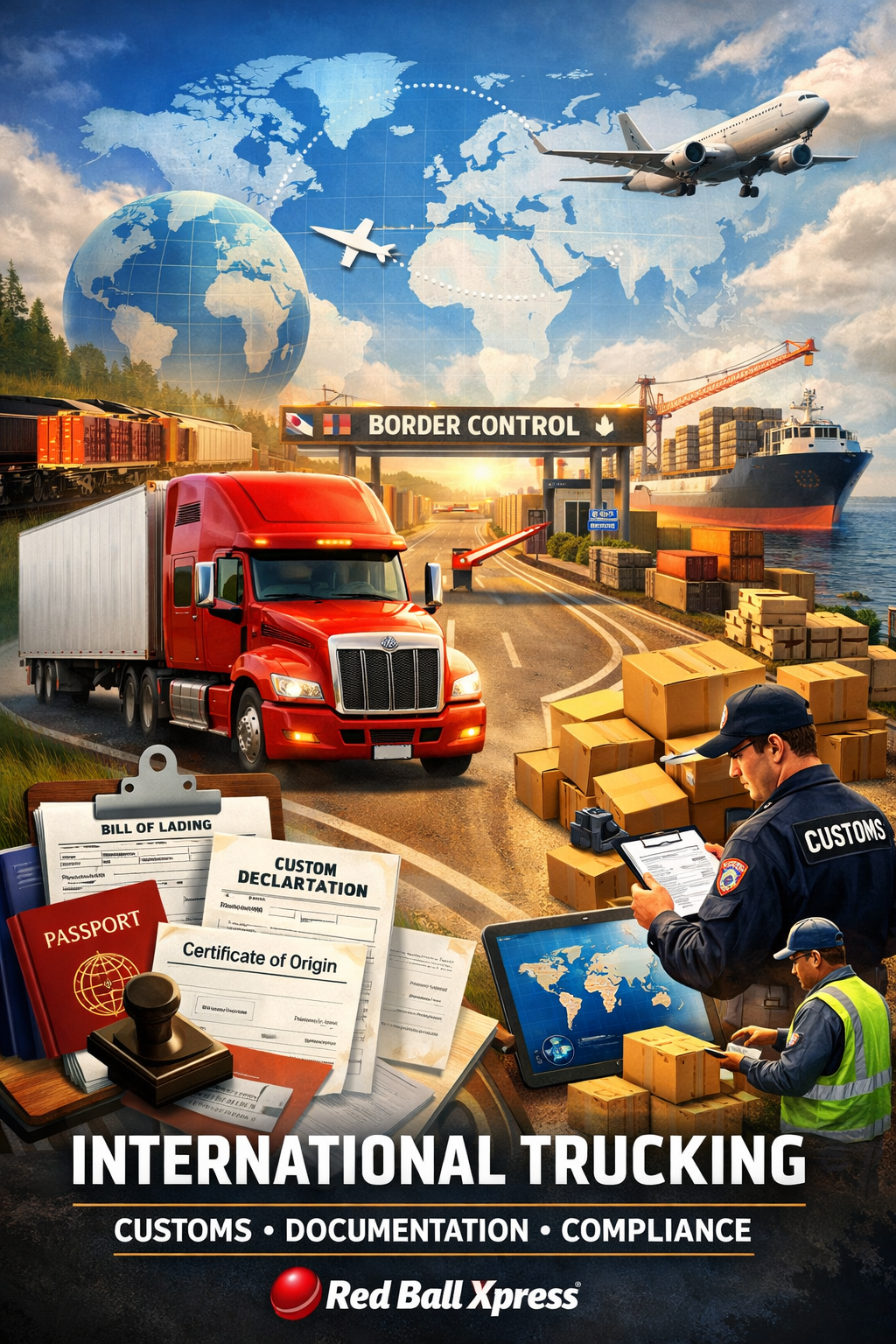
Understanding International Trucking

International trucking involves transporting goods across countries via road networks. Unlike domestic trucking, it requires adherence to multiple legal frameworks, customs procedures, and border security protocols. International trucking is critical for businesses that rely on import/export operations, especially when air or sea transport may be costly or slower for certain cargo types.
Some common types of international trucking include:
-
Cross-border LTL (Less-Than-Truckload): Smaller shipments shared with other cargo.
-
Full Truckload (FTL): Dedicated truck for a single client’s goods.
-
Intermodal Trucking: Using trucks in combination with rail, sea, or air shipping.
Each type requires proper documentation, coordination, and compliance with both the origin and destination country’s regulations.
Key Challenges in International Trucking
While international trucking offers speed and flexibility compared to sea freight, it comes with unique challenges:
-
Customs Clearance Delays: Improper documentation can result in goods being held at borders, leading to costly delays.
-
Regulatory Compliance: Different countries enforce specific rules regarding cargo types, vehicle standards, and driver certifications.
-
Insurance and Liability: International freight insurance policies differ from domestic coverage, requiring careful attention to risk management.
-
Tariffs and Duties: Cross-border shipments may be subject to import/export taxes, which must be calculated accurately.
-
Logistics Coordination: Coordinating multiple carriers, tracking shipments, and ensuring timely border crossings can be complex.
Understanding these challenges helps businesses plan effectively and avoid unnecessary delays or penalties.
Essential Documentation for International Trucking
Proper documentation is the foundation of successful international trucking. Without it, shipments can be delayed, fined, or even seized. Here are the key documents every international shipment should have:
-
Bill of Lading (BOL)
The Bill of Lading is the most important shipping document. It acts as a contract between the shipper, carrier, and consignee, detailing the type, quantity, and destination of goods. -
Commercial Invoice
This document lists the shipment’s value, origin, and terms of sale. Customs authorities use the commercial invoice to assess duties and taxes. -
Packing List
A detailed packing list outlines the contents of each shipment container, including item descriptions, quantities, and dimensions. -
Customs Declaration Form
Required by border authorities, this form provides essential information about the goods, including HS codes, country of origin, and value. -
Certificate of Origin
This certificate confirms the country where the goods were manufactured and can impact tariff calculations under trade agreements. -
Import/Export Licenses
Certain commodities require special permits for export or import. For example, chemicals, pharmaceuticals, or electronics may need regulatory clearance. -
Insurance Certificate
An insurance certificate ensures the shipment is protected against loss, damage, or theft during transit.
At Red Ball Xpress, we ensure all documentation is accurate, complete, and compliant, reducing the risk of delays at international borders.
Customs Compliance Tips
To avoid complications in international trucking, businesses must prioritize customs compliance. Here are some best practices:
-
Use Accurate HS Codes: Harmonized System (HS) codes classify goods for duty calculation. Incorrect codes can trigger fines or seizure.
-
Maintain Records: Keep detailed shipment records for at least five years, as many countries may audit cross-border shipments.
-
Stay Updated: Customs regulations change frequently. Regularly review country-specific rules to avoid non-compliance.
-
Engage Licensed Customs Brokers: These professionals act as intermediaries between shippers and border authorities, ensuring smooth clearance.
-
Understand Tariff Schedules: Be aware of tariffs, exemptions, and trade agreements that impact costs.
Choosing the Right Trucking Partner
International trucking success depends heavily on selecting a reliable carrier. Consider the following when choosing a trucking partner:
-
Experience in Cross-Border Freight: Knowledge of local regulations, border procedures, and documentation is critical.
-
Tracking Capabilities: Real-time tracking helps monitor shipments and update clients proactively.
-
Insurance Coverage: Ensure the carrier provides adequate insurance for cross-border shipments.
-
Network of Partners: Strong connections with customs brokers, freight forwarders, and border authorities reduce transit risks.
-
Compliance and Certifications: Verify that the carrier meets international trucking standards and has necessary certifications.
Red Ball Xpress specializes in international trucking, combining years of experience with modern technology to provide reliable, timely, and compliant delivery services.
Tips for Businesses Shipping Internationally
-
Plan Ahead: Start documentation and customs preparation well before the shipment date.
-
Consolidate Shipments: Reducing the number of shipments can lower costs and simplify customs clearance.
-
Label Clearly: Accurate labeling reduces the risk of inspection delays or lost cargo.
-
Use Technology: Shipment tracking, automated documentation, and customs management tools save time and prevent errors.
-
Train Your Staff: Employees should understand cross-border requirements, documentation, and compliance standards.
Conclusion
International trucking is a critical component of global supply chains. While it presents unique challenges, careful planning, accurate documentation, and compliance with customs regulations can make the process seamless. Businesses that prioritize these factors enjoy faster delivery, lower risk, and higher customer satisfaction.
At Red Ball Xpress, we provide end-to-end international trucking solutions, ensuring your shipments cross borders efficiently, safely, and cost-effectively. Whether you’re a small business or a multinational enterprise, our expertise in customs, documentation, and compliance ensures smooth operations every step of the way.
