How Backhauls Work and Why They Matter for Carriers
January 15, 2026
In the trucking and logistics industry, efficiency is everything. Carriers are always looking for ways to maximize earnings, reduce costs, and make each trip as profitable as possible. One key concept that often gets overlooked, yet plays a crucial role in carrier profitability, is the backhaul. Understanding how backhauls work and why they matter can transform the way carriers plan their routes, manage expenses, and increase their bottom line.
What Is a Backhaul?
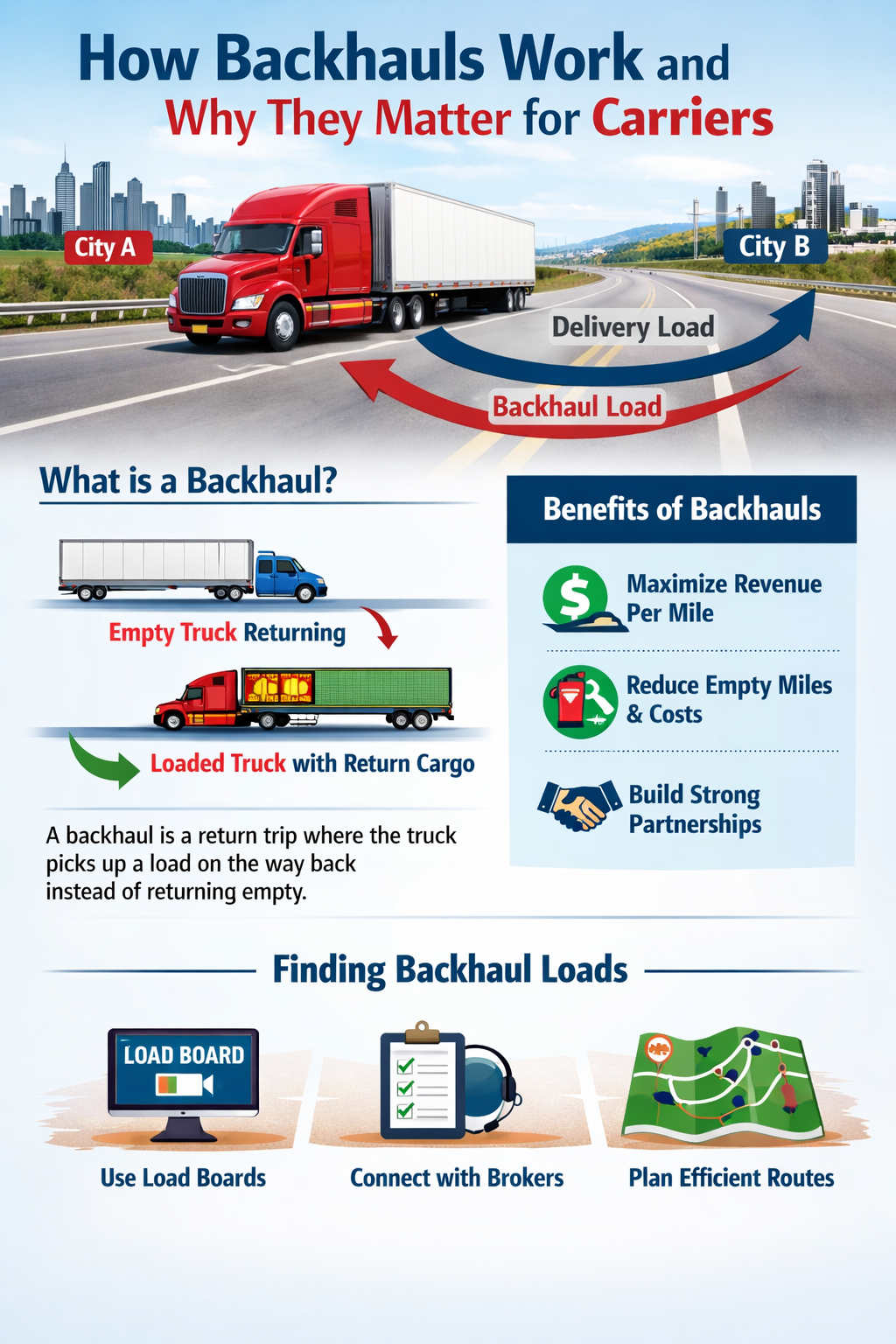
A backhaul is essentially a return trip for a truck after it has completed its primary delivery. Instead of returning empty to the point of origin, a carrier secures another load to transport on the way back. This helps fill otherwise wasted miles with revenue-generating freight, turning what would be a cost center into a profit opportunity.
For example, suppose a truck delivers goods from City A to City B. Without a backhaul, the truck would return empty to City A, costing fuel, labor, and maintenance without generating income. With a backhaul, the truck picks up a shipment in City B destined for City A or a nearby location, effectively covering both trips with revenue.
How Backhauls Work
Backhauls rely on careful planning and coordination. Here’s a step-by-step breakdown of how they typically work for carriers:
-
Initial Load Assignment – The carrier receives a load assignment, for example, transporting goods from a manufacturer in City A to a retailer in City B.
-
Route Planning – The carrier analyzes the route for potential backhaul opportunities. Load boards, broker connections, and company logistics networks are often used to identify available freight in the delivery city.
-
Negotiating a Backhaul Load – Once a potential backhaul is identified, the carrier negotiates the rate and terms. Effective negotiation ensures the backhaul remains profitable after factoring in fuel, tolls, driver hours, and other expenses.
-
Pickup and Delivery – The carrier delivers the initial load, then picks up the backhaul shipment. By strategically scheduling the backhaul, the carrier avoids deadhead miles, reduces costs, and increases efficiency.
-
Return Trip – The backhaul load is delivered, and the truck may either pick up another load, if possible, or return empty to the base.
Why Backhauls Matter for Carriers
Backhauls are not just a convenience—they are essential to profitable operations. Here are several reasons why they matter:
1. Maximizing Revenue Per Mile
One of the biggest expenses in trucking is deadhead miles—when a truck travels without a load. Backhauls allow carriers to earn money on these miles, maximizing revenue per mile and increasing overall profitability.
2. Reducing Operational Costs
Empty miles not only waste potential revenue, they also incur fuel costs, wear and tear, and labor expenses. By securing backhauls, carriers reduce the financial impact of these return trips. For long-haul trucking, where fuel and labor represent significant portions of total costs, even a small reduction in empty miles can have a large effect on profit margins.
3. Improving Route Efficiency
Backhauls help carriers optimize their routes by aligning deliveries and pickups. Instead of traveling empty for hundreds of miles, carriers can plan multi-leg routes that fill the truck for more of its journey. This improves overall operational efficiency and can allow carriers to take on more jobs without additional resources.
4. Strengthening Broker and Carrier Relationships
Carriers who consistently leverage backhaul opportunities are seen as efficient and reliable partners. Brokers and shippers often favor carriers who can provide both outbound and inbound transport solutions, fostering long-term business relationships.
5. Environmental Benefits
Reducing empty miles isn’t just good for profits—it’s also better for the environment. Fewer empty trucks on the road mean lower fuel consumption and reduced greenhouse gas emissions, which aligns with sustainability goals and regulatory compliance initiatives.
Tips for Finding and Using Backhauls
To maximize the benefits of backhauls, carriers can follow these practical tips:
-
Use Load Boards Effectively – Platforms like Red Ball Express Load Board provide real-time access to available freight for backhaul opportunities. Filter by route, delivery date, and load type to find suitable backhaul shipments.
-
Build Strong Broker Relationships – Brokers often have insight into available freight for return trips. Maintaining good communication and trust with brokers can open more backhaul opportunities.
-
Plan Ahead – Look at both the outbound and potential return routes before accepting loads. Efficient planning ensures that the backhaul is logistically feasible and profitable.
-
Factor in Costs Accurately – Always calculate fuel, labor, tolls, and other expenses to ensure the backhaul remains profitable. Don’t compromise on rates just to avoid deadhead miles.
-
Be Flexible – Sometimes the ideal backhaul load may involve slight deviations from the original route. Being flexible can increase the number of viable backhaul options.
Real-World Example
Consider a regional carrier who delivers food products from Dallas to Houston. Without a backhaul, the truck returns empty to Dallas, incurring around 250 miles of deadhead costs. By using the load board to find a shipment from Houston to Austin, the carrier can transport goods, reduce empty miles, and generate revenue for a segment of the journey that would otherwise be unprofitable.
Over the course of multiple trips, these savings accumulate, resulting in thousands of dollars in additional profit annually while reducing fuel usage and improving overall fleet efficiency.
Conclusion
Backhauls are a critical element of successful trucking operations. They allow carriers to maximize revenue, reduce operational costs, improve efficiency, and strengthen industry relationships. With careful planning, strong broker connections, and effective use of technology like load boards, backhauls transform empty miles into profit-generating opportunities.
For carriers, understanding backhauls is more than just a logistics tactic—it’s a business strategy that can significantly improve the bottom line. As the trucking industry continues to evolve with technology and real-time logistics solutions, carriers who master backhauls will remain competitive, profitable, and environmentally responsible.