Managing Supply Chain Delays in a Post-Pandemic World: What Has Changed and What’s Next
January 29, 2026
The global supply chain has undergone one of the most dramatic transformations in modern history. What was once a predictable, efficiency-driven system became fragile almost overnight during the COVID-19 pandemic. Factory shutdowns, port congestion, labor shortages, and unpredictable demand exposed weaknesses that had been hidden for decades. Today, businesses are operating in a post-pandemic world — but supply chain delays have not disappeared. Instead, they have evolved. At Red Ball Express Logistics, we help shippers and carriers navigate this new reality with smarter planning, better visibility, and resilient logistics strategies. Let’s explore what has changed, why delays still happen, and what the future of freight and supply chain management looks like.
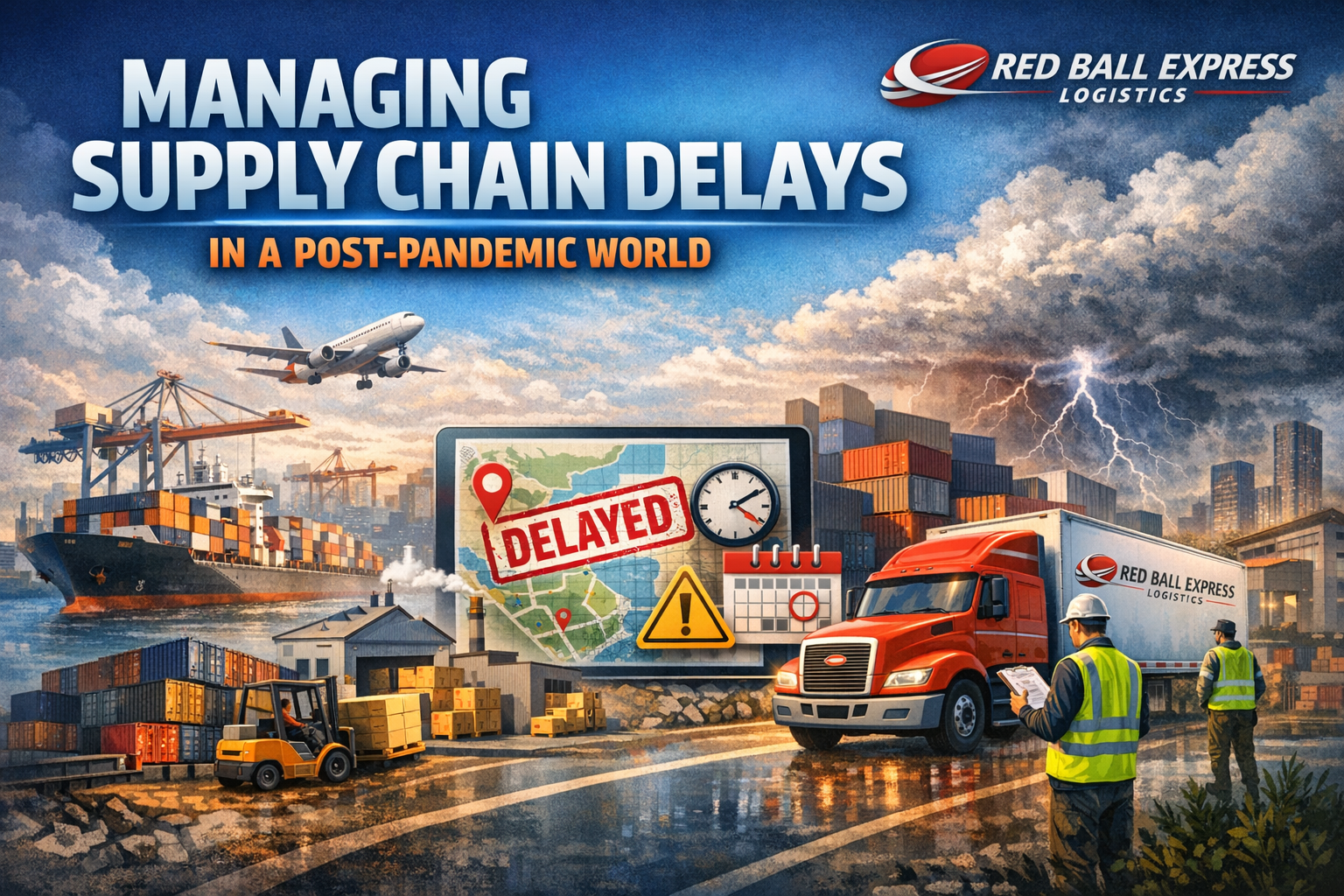
How the Pandemic Changed Global Supply Chains
Before the pandemic, most supply chains were designed for speed and cost efficiency. Companies relied heavily on just-in-time (JIT) inventory models, global sourcing, and lean operations. These systems worked well — until global disruptions exposed their vulnerabilities.
When lockdowns halted production in Asia and ports became overwhelmed, businesses struggled to source raw materials and finished goods. Shipping delays stretched from days into months. Even essential industries such as healthcare and food distribution experienced breakdowns.
At Red Ball Express Logistics, we saw firsthand how even well-established freight networks could stall due to lack of visibility, limited carrier availability, and unpredictable border restrictions.
The pandemic didn’t just create temporary disruption — it permanently reshaped how companies think about logistics, risk, and reliability.
What Has Changed Since the Pandemic
1. From Cost Efficiency to Resilience
The biggest shift has been the move from pure cost optimization to supply chain resilience. Companies now prioritize flexibility, redundancy, and alternative sourcing instead of relying on single suppliers or trade lanes.
Businesses are diversifying vendors, building regional partnerships, and reshoring or nearshoring manufacturing to reduce dependency on distant suppliers. Red Ball Express Logistics supports this shift by offering multi-modal transportation solutions and flexible routing strategies that protect shippers from disruptions.
2. Increased Demand for Visibility and Real-Time Data
During the pandemic, many companies lacked visibility into where their shipments were or when they would arrive. This uncertainty made planning nearly impossible.
Today, real-time tracking, predictive analytics, and automated alerts are no longer optional — they are essential. Companies want shipment transparency from pickup to final delivery.
At Red Ball Express Logistics, we invest in modern freight technology that enables customers to track loads in real time, monitor transit risks, and make informed decisions faster. This visibility helps reduce downtime, manage inventory better, and improve customer satisfaction.
3. Labor Shortages and Workforce Challenges
The logistics industry continues to face driver shortages, warehouse staffing gaps, and skilled labor constraints. While automation is helping, the human workforce remains critical to freight movement.
Post-pandemic, many companies are focusing on driver retention, safety programs, better scheduling, and digital tools that reduce paperwork and improve work conditions.
Red Ball Express Logistics works closely with reliable carrier partners to ensure stable capacity while maintaining high safety and service standards across our transportation network.
4. Inventory Strategies Have Shifted
Before COVID-19, companies carried minimal inventory to reduce holding costs. Now, many are adopting “just-in-case” inventory models, maintaining buffer stock to absorb disruptions.
While higher inventory increases costs, it reduces the risk of lost sales, production shutdowns, and dissatisfied customers. The challenge is balancing inventory levels with transportation efficiency — a challenge Red Ball Express Logistics helps solve through optimized routing, smarter freight consolidation, and flexible warehousing support.
5. E-Commerce Growth Has Redefined Expectations
The pandemic accelerated e-commerce by several years, creating new expectations around delivery speed, tracking accuracy, and service reliability. Customers now demand faster shipping, real-time updates, and predictable delivery windows.
This has pushed logistics providers to improve last-mile capabilities, enhance route planning, and adopt technology that supports real-time communication. At Red Ball Express Logistics, we focus on reliable transit times and transparent communication so businesses can meet evolving customer demands confidently.
Why Supply Chain Delays Still Exist
Despite progress, delays remain common due to several ongoing challenges:
-
Port congestion and infrastructure bottlenecks
-
Geopolitical conflicts and trade policy changes
-
Extreme weather events and climate disruptions
-
Fuel price volatility
-
Labor shortages and carrier capacity fluctuations
What has changed is not the presence of risk — but how businesses respond to it. Instead of reacting to disruptions, companies are learning to anticipate, plan, and adapt.
Red Ball Express Logistics emphasizes proactive logistics management through data-driven planning, strong carrier relationships, and flexible transportation solutions that keep freight moving even during uncertain conditions.
How Companies Can Reduce Delays in the New Supply Chain Era
1. Build Redundancy into Transportation Networks
Relying on a single carrier, port, or trade route increases vulnerability. Companies should diversify transportation partners and shipping lanes to minimize disruption risks.
Red Ball Express Logistics provides access to a broad carrier network and multiple transportation modes — including full truckload (FTL), less-than-truckload (LTL), intermodal, and expedited services — allowing customers to shift strategies when disruptions occur.
2. Use Predictive Analytics for Better Planning
Modern logistics is no longer reactive. Predictive tools can analyze historical trends, weather patterns, traffic conditions, and demand cycles to anticipate delays before they happen.
By leveraging forecasting tools and advanced data insights, Red Ball Express Logistics helps customers optimize routes, schedule shipments more effectively, and reduce dwell time across supply chains.
3. Improve Communication Across Supply Chain Partners
Many delays escalate due to miscommunication — missed updates, delayed paperwork, or lack of shipment status visibility. Real-time collaboration between shippers, carriers, warehouses, and customers is critical.
Our digital platforms and logistics coordination teams at Red Ball Express Logistics ensure continuous communication throughout the shipment lifecycle, minimizing surprises and improving accountability.
4. Invest in Strong Carrier Relationships
Reliable freight depends on strong partnerships. Rather than transactional carrier relationships, companies now seek long-term collaboration with transportation providers that prioritize service quality and operational reliability.
Red Ball Express Logistics partners with trusted carriers who meet strict safety, compliance, and performance standards — ensuring dependable service even during high-volume seasons or market disruptions.
What’s Next for the Supply Chain Industry?
1. Smarter Automation and AI-Driven Logistics
Artificial intelligence, machine learning, and automation will continue reshaping logistics. From route optimization and predictive maintenance to dynamic pricing and demand forecasting, AI will reduce inefficiencies and improve reliability.
At Red Ball Express Logistics, we see intelligent automation playing a major role in minimizing delays, improving service accuracy, and creating more agile supply chains.
2. Sustainability Will Become a Core Priority
Environmental responsibility is no longer optional. Governments, consumers, and investors expect logistics providers to reduce emissions and adopt greener transportation practices.
Electric trucks, optimized routing, freight consolidation, and alternative fuels will become increasingly common. Red Ball Express Logistics supports sustainability initiatives by optimizing routes, reducing empty miles, and working with eco-conscious carrier partners.
3. Nearshoring and Regional Supply Networks Will Expand
To reduce exposure to long overseas shipping times and geopolitical risk, companies are shifting production closer to home. Nearshoring and regional manufacturing hubs will shorten lead times and increase supply chain stability.
This trend benefits domestic logistics providers like Red Ball Express Logistics, which specializes in flexible, scalable transportation solutions across regional and national networks.
4. Resilience Will Outrank Speed Alone
Speed will always matter — but resilience, reliability, and adaptability will matter more. Companies will favor logistics partners who can navigate disruption, communicate clearly, and provide consistent service during unpredictable conditions.
Red Ball Express Logistics positions itself as a resilience-driven logistics partner, helping businesses build freight strategies that withstand market volatility while maintaining performance and customer satisfaction.
How Red Ball Express Logistics Helps Businesses Stay Ahead
At Red Ball Express Logistics, we understand that supply chain delays impact more than shipments — they affect revenue, customer trust, and brand reputation. That’s why we focus on proactive freight management, real-time visibility, and flexible transportation solutions that help businesses succeed in today’s evolving logistics environment.
Our approach includes:
-
Reliable carrier partnerships
-
Advanced shipment tracking and analytics
-
Multi-modal transportation solutions
-
Proactive communication and support
-
Custom logistics strategies tailored to business needs
By combining technology with experience and customer-first service, we help businesses reduce delays, optimize operations, and build resilient supply chains ready for the future.
Final Thoughts
The post-pandemic world has permanently reshaped supply chains. Delays are no longer rare disruptions — they are ongoing risks that require strategic planning, digital innovation, and strong logistics partnerships.
Businesses that succeed moving forward will be those that invest in visibility, resilience, and adaptability. With the right transportation partner, companies can transform uncertainty into opportunity.
Red Ball Express Logistics remains committed to helping shippers navigate complexity, overcome delays, and move freight smarter, faster, and more reliably — today and into the future.