Sustainability and Green Logistics: What 2026 Holds for Carriers
February 5, 2026
In 2026, sustainability is no longer a trend—it’s a business imperative and a central force reshaping the logistics industry. As emissions regulations tighten, customer expectations evolve, and technologies advance rapidly, carriers that embrace green logistics are finding new opportunities for efficiency, resilience, and competitive advantage. This blog explores how sustainable practices—particularly the electrification of fleets, emissions tracking, and broader green innovations—are transforming carriers in logistics today and what this means for the future.
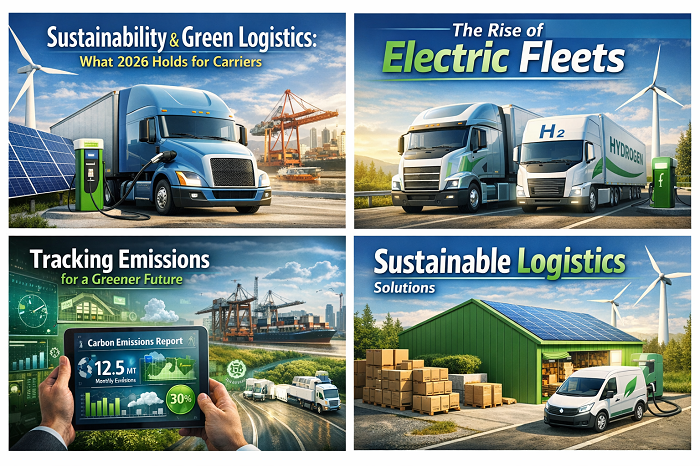
1. Why Sustainability Is No Longer Optional
Logistics operations have long been major contributors to global greenhouse gas emissions. Transportation alone accounts for roughly 24% of global CO₂ emissions, with road freight responsible for a significant share of that total. Traditionally reliant on fossil fuels, the logistics sector is now under increasing pressure from governments, investors, and customers to reduce its environmental footprint. In 2026, sustainability isn’t just a corporate social responsibility (CSR) checkbox—it’s a strategic requirement.
Governments and international bodies are enforcing stricter environmental standards, and major economies like the U.S. are expanding incentives for clean energy adoption. For carriers, this means aligning operations with emissions targets and sustainability frameworks isn’t just beneficial—it’s essential to competitiveness and compliance.
2. The Electrification of Logistics Fleets
One of the most visible shifts in sustainable logistics is the transition from diesel-powered vehicles to electric and zero-emission fleets. The growth of electric fleets is a defining trend in 2026, supported by government incentives, evolving infrastructure, and technological maturity.
Electric Trucks: The Game Changer
Electric vehicles (EVs) are reshaping how freight moves. In 2026, major carriers and logistics companies are deploying electric trucks not just for short urban routes but increasingly for long-haul operations as charging infrastructure expands. EV adoption is driven by several key advantages:
-
Significant emission reductions: Electric trucks produce far fewer emissions than diesel alternatives, helping carriers move toward net-zero goals.
-
Lower operating costs: Electricity is typically cheaper than diesel fuel, and electric drivetrains require less maintenance—leading to lower total cost of ownership over time.
-
Government incentives: Policies like the U.S. Infrastructure Investment and Jobs Act include tax credits for electric commercial vehicles, making the upfront investment more attractive for fleet owners.
Large corporations are actively expanding their electric fleets. For example, logistics equipment manufacturers are raising significant funding to scale EV production, and companies like FedEx have placed orders for hundreds of electric delivery trucks as part of broader decarbonization strategies.

Beyond Battery Electric: Hydrogen and Alternative Fuels
While battery-electric vehicles dominate short-distance and regional logistics, hydrogen fuel-cell vehicles are emerging as another sustainable option—especially for long-haul transport. Hydrogen trucks offer rapid refueling and extended range, making them suitable for heavy freight operations that electric batteries currently struggle with.
Both technologies signal a future in which carriers can choose from diverse clean propulsion systems tailored to different route requirements and operational needs.
3. Real-Time Emissions Tracking and Transparency
In 2026, carriers are under increasing pressure to not only reduce emissions but also to measure and report them accurately. Carbon transparency has become a major differentiator in logistics partnerships and customer contracts. Companies are now expected to provide reliable, data-backed reporting on the environmental impact of shipments.
This transparency serves multiple purposes:
-
Regulatory compliance: Accurate emissions tracking helps carriers meet national and international reporting standards.
-
Customer demand: Shippers and end customers increasingly prefer logistics partners who can demonstrate measurable progress toward sustainability goals.
-
Operational insights: Emissions data gives carriers visibility into inefficiencies and helps them target improvements in routing, fuel use, and asset utilization.
Sophisticated tools, including AI-driven analytics and blockchain-based traceability systems, enable real-time emissions tracking across the supply chain. These technologies not only support reporting requirements but also empower carriers to make data-driven decisions that enhance performance and reduce environmental impact.
4. AI, Digitalization, and Operational Efficiency
Sustainability in logistics isn’t just about electrification—it’s also about smarter operations. By integrating AI and digital tools, carriers can optimize routes, reduce empty miles, and improve load consolidation. AI-driven transportation management systems are now capable of predicting demand patterns, aligning deliveries with optimal fuel usage, and adapting routes in real time based on traffic and weather conditions.
These digital innovations simultaneously save fuel and cut emissions while improving service reliability. For carriers seeking to balance sustainability targets with cost control, digital optimization is one of the most effective strategies.
5. Sustainable Warehousing and Packaging
Green logistics extends beyond transportation. Warehouses, traditionally energy-intensive hubs, are also being transformed through sustainability innovations:
-
Renewable energy integration: Solar panels and clean energy sources power warehouse operations, reducing reliance on fossil fuels.
-
Energy-efficient design: LED lighting, automation, and smart HVAC systems contribute to lower energy consumption.
-
Sustainable packaging: Logistics providers are increasingly using recyclable, biodegradable, or reusable packaging materials to minimize waste and improve overall lifecycle sustainability.
These practices not only cut environmental impact but can also enhance efficiency and reduce long-term costs.
6. The Business Case for Sustainability
Embracing sustainability offers tangible business benefits for carriers. Beyond regulatory compliance and brand reputation, companies that lead in green logistics often see:
-
Reduced operational costs: Through electrification and optimization, carriers can lower fuel expenses and maintenance costs.
-
New revenue opportunities: Green logistics competencies can attract clients with strong ESG commitments and open doors to premium service offerings.
-
Enhanced resilience: Sustainable operations tend to be more adaptive to fuel price volatility and regulatory shifts, strengthening long-term business stability.
Investing in sustainability is no longer a future aspiration—it’s a strategic priority that aligns environmental stewardship with business performance.
7. What Carriers Should Prioritize in 2026
For carriers navigating the logistics landscape in 2026, here are key areas to focus on:
-
Fleet electrification planning: Develop a phased transition to electric and alternative-fuel vehicles while leveraging available subsidies.
-
Emissions tracking and reporting: Adopt advanced tracking tools to support compliance and transparency demands.
-
Digital operations optimization: Use AI and analytics for smarter routing and load planning.
-
Sustainable partnerships: Collaborate with green suppliers, warehouses, and service providers to strengthen your entire logistics ecosystem.
-
Customer communication: Clearly communicate sustainability achievements to build trust and differentiate your services.
Conclusion
Sustainability is now engrained in the logistics industry’s DNA. By embracing electrification, digital optimization, emissions transparency, and broader green practices, carriers in 2026 are not just reducing their environmental footprint—they’re building more efficient, resilient, and competitive operations. Today’s investments in sustainability are shaping the logistics leaders of tomorrow.
