Real-Time IoT Tracking: The Secret to Reducing Freight Theft in the U.S.
November 25, 2025
Freight theft has become one of the most expensive and disruptive challenges in the U.S. logistics industry. With rising cargo values, more complex supply chains, and the increasing sophistication of criminal networks, trucking companies are now facing unprecedented risk. In 2025 alone, experts estimate that freight theft losses could surpass $1.2 billion, affecting everything from consumer electronics to food, pharmaceuticals, and retail products. While traditional security tools—locks, seals, guards, and manual checks—still play a role, they are no longer enough. Criminals operate faster, smarter, and more covertly. They understand truck schedules, warehouse vulnerabilities, driver routines, and even GPS blind spots. Enter IoT-driven real-time tracking—the most effective modern solution logistics companies now depend on to combat theft. IoT (Internet of Things) technology equips trucks, trailers, and cargo with intelligent sensors that communicate continuously with cloud systems. The result is 24/7 visibility, instant alerts, automated monitoring, and the ability to react to theft as it happens, not after the fact. This article explores how IoT real-time tracking works, why it’s becoming essential, and how it is fundamentally transforming freight security in the United States.
The Growing Threat: Why Freight Theft Is Rising in America
The U.S. trucking sector is the backbone of the economy—moving nearly 72% of all domestic freight. But its scale also makes it a major target for organized theft groups.
Key Reasons Freight Theft Is Increasing:
1. High-value loads are more common.
With more electronics, luxury goods, and pharmaceuticals moving through supply chains, the opportunity for criminals is greater.
2. Organized theft rings use advanced tools.
Many criminals now use signal jammers, cloned trailers, fake pickup orders, and insider knowledge.
3. Drivers often travel long, isolated routes.
These create opportunities for “cut and run” theft or staged breakdowns.
4. Parking shortages force drivers into unsecured locations.
84% of drivers report they cannot find safe overnight parking on most routes.
5. Traditional GPS trackers are easy to bypass.
Outdated devices fail to provide continuous monitoring or immediate alerts.
Because of these challenges, companies need technology that provides constant awareness, not periodic updates. That’s where IoT becomes a game changer.
What Is Real-Time IoT Tracking?
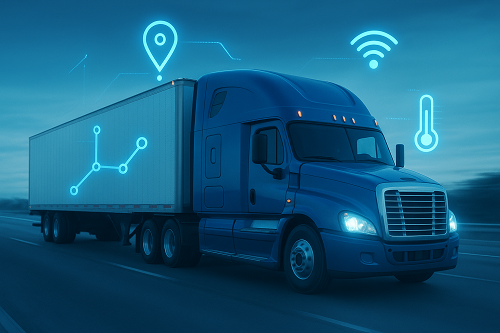
IoT tracking uses smart devices—sensors, telematics units, RFID tags, and cloud-connected systems—to monitor vehicles, trailers, and cargo in real time. Unlike old tracking systems that update every 10–15 minutes, IoT sensors send continuous second-by-second data.
What IoT Tracking Monitors:
-
Truck location (GPS)
-
Trailer doors (open/close detection)
-
Unauthorized movement
-
Route deviations
-
Cargo temperature and humidity
-
Load weight changes
-
Vibration or impact events
-
Driver behavior
-
Fuel levels
-
Battery tampering
-
Geofence entry/exit events
This creates a digital shield around the truck and its cargo—making it nearly impossible for thieves to act without being detected.
How IoT Prevents Freight Theft in Real Time
1. Immediate Alerts for Unauthorized Trailer Access
One of the biggest threats in the trucking industry is “slip and lift” theft, where criminals simply open the trailer and remove cargo when the truck is parked. Many thefts happen in less than 5 minutes.
With IoT door sensors:
-
Any unauthorized opening triggers an instant SMS, app, or dashboard alert.
-
Dispatch can contact the driver immediately.
-
Drivers receive audible warnings.
-
Real-time video or photographs can be captured (if camera-enabled IoT devices are installed).
Thieves no longer have time to complete the theft before detection.
2. Real-Time GPS Prevents Cargo Disappearing Off the Map
Traditional GPS trackers often update infrequently, giving criminals a time window to disable devices or move the truck into a signal dead zone.
IoT GPS trackers send constant live location data, including:
-
Speed
-
Direction
-
Route path
-
Idle time
-
Stoppage patterns
If the truck deviates even slightly from the assigned route, the system flags it instantly.
This allows:
-
Dispatchers to intervene before theft escalates
-
Faster recovery if theft occurs
-
Drivers to feel protected on risky routes
For stolen loads, real-time IoT tracking can lead law enforcement directly to the cargo—often within minutes, not hours.
3. Anti-Jamming Protection
Many modern theft crews use GPS jammers.
IoT systems solve this by using:
-
Multi-channel GPS
-
Bluetooth
-
Cellular network triangulation
-
Satellite fallback communication
Even if thieves attempt to jam the GPS signal, the system continues transmitting location data via alternative channels.
This makes the load nearly impossible to hide.
4. Smart Geofencing Blocks Unauthorized Movements
Geofencing creates “virtual boundaries” around:
-
Warehouses
-
Delivery zones
-
High-risk areas
-
Refueling points
-
Pre-approved rest stops
If the truck leaves a geofenced area at the wrong time—or enters a known danger zone—the system sends an instant alert.
This helps prevent:
-
Inside-job freight theft
-
Unauthorized pickup
-
Stolen trailer relocation
-
Route-based criminal targeting
Geofencing has proven to reduce theft incidents by 40–60% in major logistics companies.
5. IoT Sensors Detect Suspicious Load Changes
Smart load sensors can identify when:
-
Weight drops suddenly
-
The trailer is partially emptied
-
Cargo is being shifted or accessed
-
A crane or forklift is lifting goods while the truck is unattended
This protects against:
-
Partial cargo theft (most common)
-
Inside jobs
-
Night-time warehouse theft
-
Theft during cross-docking
IoT sensors act as silent guards that monitor the cargo even when no one else can.
6. Reefer (Temperature-Controlled) Theft Alerts
Temperature-sensitive loads like:
-
Food
-
Medicine
-
Beverages
-
Chemicals
are often targeted because they are high-value and can spoil quickly.
IoT sends alerts when:
-
The reefer unit is turned off intentionally
-
The temperature rises suddenly (possible tampering)
-
Doors are opened unexpectedly
This protects both cargo value and compliance—and quickly identifies tampering.
7. Driver Panic Buttons Enhance Safety
Many IoT systems include panic buttons in the vehicle cab or wearable devices.
If the driver feels threatened or suspects theft, they can immediately:
-
Alert dispatch
-
Lock the trailer electronically (if equipped)
-
Trigger an emergency location beacon
This is crucial for preventing:
-
Hijackings
-
Parking-lot theft
-
Roadside robbery attempts
Drivers gain confidence knowing help is one button away.
Real Success: How IoT Has Reduced Theft in the U.S.
The impact of IoT tracking technologies is dramatic.
Case Outcomes Seen Across the Industry:
-
One carrier reduced theft attempts by 75% after installing IoT door sensors.
-
A reefer fleet saved $500,000 per year by avoiding spoiled cargo due to tampering.
-
Several companies recovered stolen loads within 30–45 minutes using real-time GPS.
-
Shippers increased trust and loyalty due to transparent visibility.
-
Insurance premiums dropped for fleets that used IoT devices consistently.
In short:
IoT not only stops theft—it builds reputation, efficiency, and savings.
The Bigger Picture: Why IoT Is Becoming Standard in 2025
IoT isn’t just a security tool—it’s becoming the backbone of modern logistics.
Trucking companies now rely on IoT for:
-
Operational efficiency
-
Fleet management
-
Predictive maintenance
-
Driver performance tracking
-
Fuel optimization
-
Shipment transparency for customers
With new federal guidelines encouraging digital tracking, IoT adoption is expected to reach 84% of U.S. fleets by 2027.
Companies that fail to adopt IoT risk:
-
Higher theft costs
-
Lower customer trust
-
Operational delays
-
Competitive disadvantage
-
Higher insurance rates
The future of trucking is tech-driven, and IoT is at the heart of that future.
Conclusion: IoT Is No Longer Optional—It Is Essential
Freight theft is evolving, and so must the logistics industry.
Traditional hardware, manual supervision, and outdated tracking systems cannot fight the sophisticated methods used by modern criminals.
For any trucking company that wants to safeguard cargo, stay competitive, and operate with confidence, IoT is not just a technology—it is a security strategy.
