How Micro-Fulfillment and Micro-Warehousing Are Changing Logistics
December 11, 2025
The logistics industry is undergoing one of the most rapid transformations in its history. As customer expectations for faster delivery times increase—especially same-day and next-day shipping—traditional large warehouses located on the outskirts of cities are no longer enough. This shift has given rise to two powerful trends: micro-fulfillment and micro-warehousing. These models are redefining how inventory is stored, how orders are processed, and how quickly goods reach consumers. Retailers, e-commerce companies, and even freight operators are rethinking their distribution strategies to stay competitive in a world where speed and efficiency are everything.
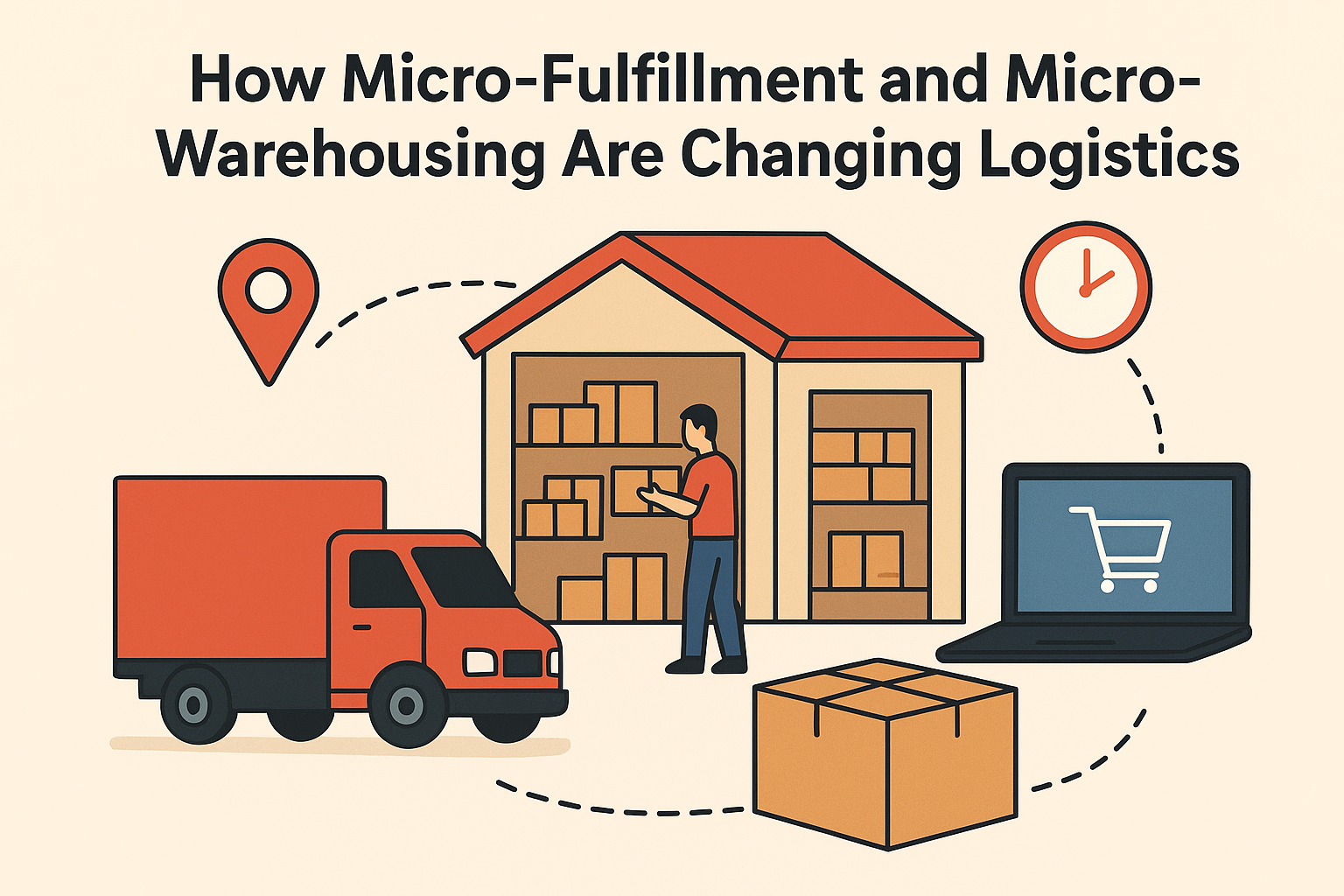
What Are Micro-Fulfillment and Micro-Warehousing?
Micro-Fulfillment
Micro-fulfillment refers to small, automated distribution centers that are strategically positioned close to consumers—often within urban neighborhoods. These facilities rely heavily on robotics, AI-driven inventory handling, and advanced picking systems to fulfill online orders quickly.
These centers usually range from 3,000 to 20,000 square feet, far smaller than traditional warehouses, yet capable of processing thousands of orders per day.
Micro-Warehousing
Micro-warehousing is the concept of placing storage spaces within cities or near high-demand zones. Unlike micro-fulfillment centers, micro-warehouses may or may not use automation; their main focus is on proximity and rapid replenishment rather than automation alone.
Both concepts share one mission: to shorten the last mile—the most time-consuming and expensive part of the logistics chain.
Why Micro-Fulfillment Is Gaining Popularity
1. The E-commerce Boom
E-commerce has skyrocketed, especially after the global pandemic. Consumers now expect fast and reliable delivery on everything—from groceries to electronics. Micro-fulfillment centers allow retailers to meet these expectations without overwhelming large distribution centers.
2. Rising Delivery Expectations
Today's consumer behavior is shaped by platforms like Amazon, Blinkit, and Walmart. Same-day delivery is no longer seen as a premium service—it is becoming the standard.
Micro-fulfillment centers position inventory closer to end users, enabling:
-
Same-day delivery
-
2-hour delivery windows
-
Click-and-collect options
3. Urbanization
As more people move into cities, last-mile delivery becomes both more challenging and more crucial. Having micro-warehouses inside cities helps companies avoid long-distance transportation and reduces delivery times drastically.
How Micro-Fulfillment and Micro-Warehousing Work
Small Footprint, High Output
These small centers rely on compact storage systems that maximize vertical and horizontal space. Automated picking robots navigate aisles and shelves, ensuring that orders are packed quickly with minimal human error.
Hybrid Inventory Models
Companies combine in-store inventory, micro-warehouse stock, and central warehouse supply to create a flexible distribution network. This approach prevents stockouts and optimizes replenishment cycles.
Technology Integration
Micro-fulfillment centers depend on advanced technologies like:
-
AI for demand prediction
-
Robotics for picking and packing
-
IoT sensors for real-time tracking
-
Warehouse Management Systems (WMS)
-
Automated conveyor systems
These tools speed up operations and reduce labor costs.
Why Micro-Warehousing Is Revolutionizing Last-Mile Delivery
1. Reducing Last-Mile Costs
Last-mile delivery accounts for 40–60% of total logistics costs. Micro-warehouses located close to consumers dramatically reduce:
-
Fuel consumption
-
Driver time
-
Overall delivery cost
This makes ultra-fast delivery profitable instead of being a financial burden.
2. Solving Urban Delivery Challenges
Urban areas suffer from congestion, limited parking, and restricted delivery times. Micro-warehouses help solve these problems by:
-
Staging orders within the city
-
Allowing deliveries to happen on foot, by bike, or via small electric vehicles
-
Reducing dependence on large trucks
This approach is not only faster but also more environmentally friendly.
3. Improving Inventory Availability
Having mini-storage hubs across a city means popular items can be replenished frequently. This ensures that businesses can always meet customer demand without delays.
Industries Rapidly Adopting Micro-Fulfillment
1. Grocery
Grocery chains are some of the earliest adopters. Consumers now expect fresh food delivered in under 60 minutes. Micro-fulfillment automation helps:
-
Reduce picking errors
-
Maintain freshness
-
Enable instant delivery
Companies like Walmart, Kroger, and Amazon Fresh are using robotic micro-fulfillment centers inside stores or attached warehouses.
2. Retail & E-commerce
Fashion, electronics, and home essentials brands use micro-warehouses to speed up order fulfillment and reduce returns due to shipping delays.
3. Pharmaceuticals
Medication delivery has strict timing and accuracy requirements. Micro-warehousing ensures that essential medicines are stocked close to urban hospitals and clinics.
4. Logistics & 3PL Companies
Third-party logistics providers are offering micro-fulfillment as an add-on service for customers who need faster delivery but do not want to invest in infrastructure.
Benefits of Micro-Fulfillment and Micro-Warehousing
1. Faster Delivery
Speed is the biggest advantage. Orders can be delivered in hours instead of days.
2. Lower Last-Mile Costs
Companies can reduce fuel costs, driver wages, and long transit times.
3. Higher Inventory Accuracy
Automated systems ensure precise stock management and reduce errors.
4. Better Customer Satisfaction
Customers get faster, more reliable deliveries—leading to repeat orders.
5. Reduced Carbon Footprint
Shorter delivery routes and smaller vehicles contribute to greener logistics.
Challenges to Consider
While micro-fulfillment offers many advantages, businesses must overcome:
1. High Setup Costs
Robotics and automation require significant upfront investment.
2. Real Estate Limitations
Finding affordable space inside crowded cities can be difficult.
3. System Integration
WMS, transport systems, and order platforms must sync perfectly for smooth operations.
4. Skilled Workforce
Automation requires trained technicians and system operators.
The Future of Micro-Fulfillment and Micro-Warehousing
The future of logistics is moving toward hyperlocal, fully automated, and highly predictive supply chains. Over the next decade, we will likely see:
-
Micro-fulfillment centers inside retail stores
-
Fully robotic dark stores (no customers, only robots)
-
Autonomous delivery vehicles connected directly to micro-warehouses
-
Predictive restocking using AI
-
Companies offering 15-minute delivery windows
In short, micro-fulfillment and micro-warehousing are not just trends—they are becoming the backbone of future logistics.
Conclusion
Micro-fulfillment and micro-warehousing are dramatically reshaping the logistics landscape. By bringing inventory closer to customers and speeding up the last mile, businesses can deliver faster, reduce costs, and improve customer satisfaction. As e-commerce continues to grow, companies that embrace these innovative models will gain a major competitive advantage.