The Rise of Nearshoring: How Mexico–USA Freight Is Reshaping American Supply Chains
December 5, 2025
Nearshoring is rapidly transforming the way American companies design, source, and move their products. As manufacturers shift production from distant countries like China and Vietnam to locations closer to home, Mexico has emerged as the strongest and most strategic partner for the United States. This shift is not just a trend—it represents one of the biggest structural changes in modern supply chain strategy. In recent years, disruptions such as pandemic shutdowns, global port congestion, rising ocean freight costs, and geopolitical tensions have exposed the weaknesses of long, fragile supply chains. Companies across industries—from automotive and electronics to retail, medical devices, and industrial goods—have realized the need for more resilient, flexible, and geographically stable operations. Nearshoring offers that solution.
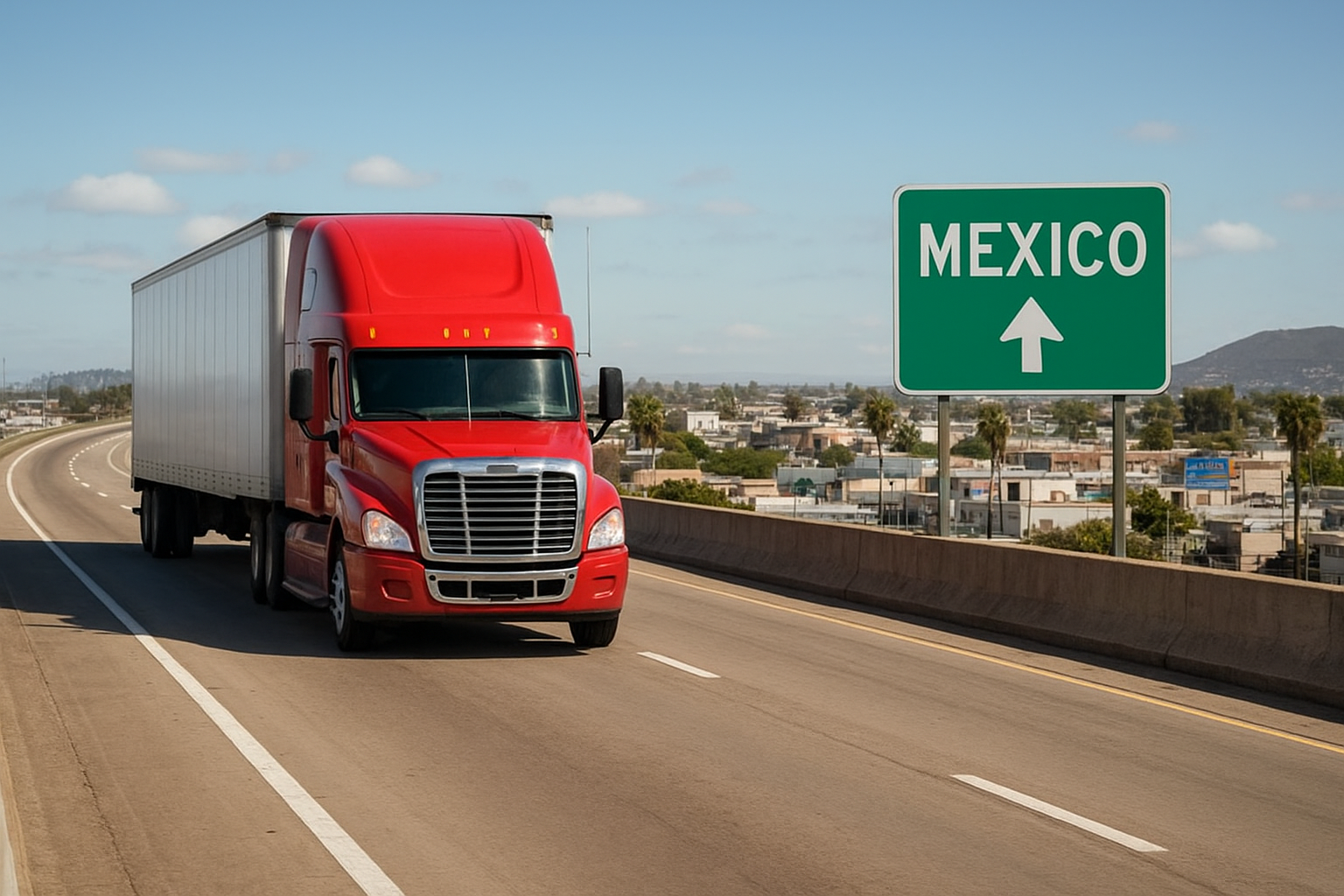
Growing Cross-Border Trade Traffic and Its Impact on U.S. Carriers
For decades, American companies built global supply chains optimized for cost. Goods were sourced from Asia, produced in massive factories, and shipped across the Pacific. But in recent years, vulnerabilities in this system—rising shipping costs, global disruptions, and geopolitical tensions—have pushed U.S. manufacturers and retailers to rethink their strategies. The result has been a rapid transition to nearshoring, with Mexico emerging as the most attractive manufacturing partner for the United States.
Nearshoring represents more than just a geographic shift—it signals a structural transformation in how American supply chains operate. With freight volume between Mexico and the United States rising every year, this shift is reshaping logistics patterns, regional economies, and the future of U.S. trucking.

Why Nearshoring to Mexico Is Accelerating
1. Faster, More Reliable Transit Times
Shipping from Asian ports often requires 20–40 days, and additional delays are common due to congestion or weather. In contrast, goods produced in Mexico can reach U.S. hubs within 48–72 hours. This speed enables:
-
Faster restocking cycles
-
Reduced inventory investment
-
Improved supply chain visibility
-
Better response to market trends
Industries operating on just-in-time models—such as automotive, aerospace, and consumer electronics—benefit the most.
2. Rising Production Costs in Asia
China’s labor costs have increased significantly over the past decade. When combined with:
-
Higher container prices
-
Ocean freight volatility
-
Port congestion
-
Longer lead times
…the total landed cost of Asian manufacturing has grown sharply. Mexico, on the other hand, provides a stable labor market with competitive wages and a stronger alignment with U.S. quality standards.
3. USMCA Trade Benefits
The United States–Mexico–Canada Agreement (USMCA) has revitalized North American manufacturing by providing:
-
Preferential tariff treatments
-
More predictable customs procedures
-
Clear rules for regional content
This gives companies a financial incentive to shift operations to Mexico while keeping supply chains integrated across North America.
4. Reduced Global Risk
Nearshoring helps companies minimize exposure to:
-
Trade wars
-
Political instability
-
Pandemic-related shutdowns
-
Risky shipping routes
Mexico offers geographic security and predictable cross-border trade infrastructure.
Massive Growth in U.S.–Mexico Cross-Border Freight
Cross-border freight between the U.S. and Mexico has surged to record levels. Laredo, Texas, has overtaken Los Angeles and Long Beach as the #1 trade gateway of the United States, handling hundreds of billions of dollars in annual trade.
Leading industries include:
-
Automotive and EV manufacturing
-
Aerospace components
-
Consumer electronics
-
Medical devices
-
Apparel and textiles
-
Industrial machinery
Major freight corridors such as Laredo–Monterrey, El Paso–Juárez, and San Diego–Tijuana are now among the most active trade routes in the world.
How Nearshoring Is Reshaping American Supply Chains
1. A Shift to Regional Production Networks
Companies are moving away from long global chains and designing regional supply ecosystems where:
-
Components are sourced in the U.S.,
-
Assembly happens in Mexico,
-
Final distribution returns to U.S. markets.
This increases reliability and reduces logistics complexity.
2. Demand Surge for U.S. Trucking Companies
Over 70% of cross-border trade moves by truck, creating major opportunities for:
-
FTL carriers
-
LTL specialists
-
Cross-dock operators
-
Border drayage providers
U.S. carriers are seeing record demand for dedicated lanes to and from border cities.
3. Increased Focus on Compliance and Security
Cross-border freight requires:
-
Advanced customs documentation
-
CTPAT-certified carriers
-
Secure warehouses
-
GPS-monitored loads
Shippers now prioritize carriers that can offer secure, compliant, and tech-enabled services.
4. Technology as a Competitive Advantage
Modern cross-border operations rely on:
-
Real-time tracking
-
Automated customs filing
-
AI-based route optimization
-
Digital load boards
-
ELD-compliant fleet management
Carriers that invest in technology are better equipped to win high-value freight.
Impact on U.S. Carriers and Logistics Providers
1. Higher Freight Volumes and Better Rates
Cross-border loads often pay 30–50% more due to additional handling and compliance needs. Carriers servicing these lanes enjoy higher revenue and consistent freight demand.
2. Investment in Border Infrastructure
Carriers are expanding:
-
Laredo and El Paso yards
-
Secure drop lots
-
Transload and cross-dock facilities
-
CTPAT-certified warehouses
This boosts capacity and shortens border wait times.
3. Collaboration with Mexican Carriers
Many U.S. carriers now partner with Mexican fleets to ensure smooth transfers at the border. This collaboration improves safety, compliance, and operational efficiency.
4. Pressure to Address Driver Shortages
With rising freight volumes, carriers face renewed pressure to recruit, train, and retain drivers—especially those experienced in cross-border operations.
Conclusion
The rise of nearshoring is not a passing phase—it represents a long-term realignment of North American supply chains. As companies shift manufacturing from Asia to Mexico, the Mexico–USA freight corridor is rapidly becoming one of the most important trade routes in the world. This transformation offers tremendous opportunities for U.S. trucking companies, logistics providers, and cross-border specialists.
Nearshoring delivers faster transit times, reduced risk, lower supply chain costs, and stronger integration across North America. As freight volumes surge, carriers that invest in technology, border infrastructure, compliance, and driver development will be best positioned to lead in this new era.
In the coming decade, the United States, Mexico, and Canada are expected to operate more like a unified manufacturing ecosystem than three separate markets. The companies that adapt early—particularly in logistics and trucking—will become the backbone of this in
