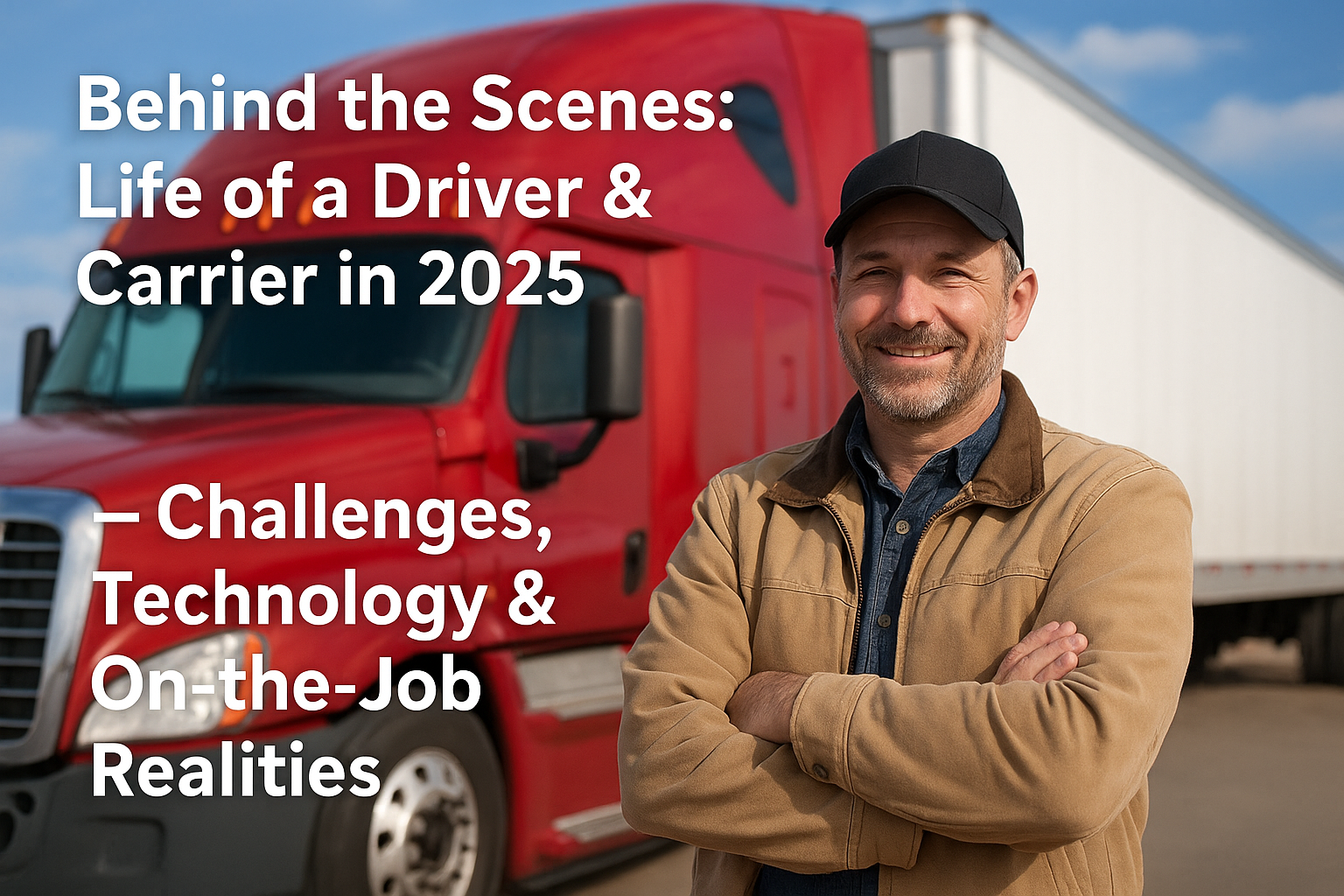
Behind the Scenes: Life of a Driver & Carrier in 2025 — Challenges, Technology & On-the-Job Realities
December 8, 2025
The trucking industry has always been the backbone of North American commerce. Whether moving retail goods, automotive parts, produce, or critical manufacturing components, truck drivers and carrier partners make the supply chain function day after day. Yet while logistics companies and shippers focus heavily on costs, speed, and efficiency, the human element behind every shipment often goes unnoticed. In 2025, the life of a driver looks far different than it did a decade ago. New technologies, evolving regulations, unpredictable market conditions, and everyday operational challenges have reshaped what it means to work on the road. At Red Ball Express LLC, we believe the industry must continue giving drivers and carriers the respect — and support — they deserve.
1. The Ongoing Driver Shortage Problem
The driver shortage has been one of the most persistent challenges in logistics. Despite competitive pay and higher demand, young workers entering the industry have declined year after year. Several factors contribute to the shortage:
Aging Workforce
The average age of CDL drivers in the U.S. remains in the mid-50s. Many are nearing retirement, but fewer younger drivers are replacing them.
Lifestyle Concerns
Long hours on the road, limited time at home, and the stress of navigating congested highways discourage new entrants.
Training Costs
Obtaining a CDL and attending driving school can cost thousands of dollars — a barrier for many.
This shortage impacts carriers and shippers alike, leading to increased freight rates, tighter capacity, and scheduling pressure.
2. Technology is Changing the Cab — For Better and Worse
Technology has transformed trucking more in the past five years than in the previous fifty. Drivers now operate within a highly digitized transportation environment.
Electronic Logging Devices (ELDs) & Real-Time Monitoring
ELDs ensure compliance with Hours-of-Service (HOS) rules, but some drivers feel constantly monitored.
At the same time, these devices improve safety, reduce fatigue-related accidents, and help carriers plan routes more accurately.
GPS & Route Optimization
Modern dispatch systems provide drivers with optimized routes that:
-
avoid congestion,
-
reduce fuel consumption,
-
and minimize delays.
The downside? Drivers sometimes feel they’ve lost freedom and flexibility in route choices.
In-Cab Cameras
Many fleets now use dual-facing or road-facing cameras to improve safety. While beneficial in accident investigations, some drivers report discomfort with increased surveillance.
Autonomous Tech — Hype vs. Reality
While headlines hype “driverless trucks,” the reality is that 2025 technology still relies heavily on human drivers. Autonomous systems today work as driver-assist, not replacements — helping with tasks like lane-keeping, distance control, and blind-spot monitoring.
The goal isn't to replace drivers but to make driving safer and less stressful.
3. The Mental and Physical Challenges Drivers Face Daily
Behind every shipment delivered on time is a driver who has navigated real-world challenges, including:
Fatigue
Even with HOS rules, long-haul driving drains energy and focus.
Unpredictable Weather
Snowstorms, heavy rain, high winds, and extreme heat add risk and stress.
Traffic & Congestion
A five-hour trip can become eight because of unexpected delays, construction zones, and city congestion.
Delivery Pressures
Shippers expect on-time delivery, and delays — even if due to factors beyond the driver’s control — add stressful pressure.
Isolation
Long hours alone in the cab can take a toll on mental well-being. Many drivers report feelings of loneliness, especially on multi-day routes.
These realities highlight why carriers must invest in better support systems and more driver-friendly environments.
4. Changing Work Conditions in 2025
The industry has rapidly evolved since 2020. In 2025, drivers face several new realities:
More Real-Time Communication
Dispatchers, customers, and fleet managers now communicate through instant apps and live updates. This improves efficiency but increases pressure on drivers to respond quickly.
Higher Compliance Requirements
Paper logs and handwritten bills are largely gone. Drivers now manage:
-
digital BOLs,
-
electronic signatures,
-
real-time location updates,
-
fleet safety checklists,
-
and compliance alerts.
These requirements help the supply chain run smoothly, but add more tasks to the driver’s day.
Demand for Faster Transit Times
Nearshoring has increased freight between the U.S.–Mexico corridor, and shippers expect faster shipments than ever. This adds stress, especially for cross-border drivers navigating customs and inspection delays.
More Female and Diverse Drivers
One positive change: more women and younger drivers entering the field, supported by better safety technology and improved working conditions.
5. The Carrier Perspective: Business Pressures and Realities
Drivers aren’t the only ones facing challenges — carriers in 2025 operate in a demanding environment too.
Fuel Price Volatility
Unpredictable fuel costs impact profitability and pricing.
Insurance Increases
Carrier insurance premiums continue rising due to nuclear verdicts and increased accident costs.
Equipment Shortages
High demand for trucks, trailers, and replacement parts causes delays in repairs and new fleet acquisition.
Compliance Costs
Carriers invest heavily in:
-
fleet management software,
-
safety technology,
-
driver training,
-
and regulatory compliance.
Despite these challenges, strong carrier partnerships are the backbone of companies like Red Ball Express LLC.
6. What Drivers Say They Need Most in 2025
Feedback from drivers across the industry shows they want:
-
Higher respect for the profession
-
More predictable schedules
-
Improved home time
-
Better communication from dispatch
-
Less pressure from unrealistic deadlines
-
Safer parking locations
-
More flexible technology requirements
-
Recognition for their hard work
A healthy trucking industry depends on meeting these needs.
7. How Red Ball Express LLC Supports Drivers & Carriers
Red Ball Express LLC understands that strong logistics performance depends on strong driver and carrier relationships. Our focus in 2025 includes:
Efficient Load Planning
Reducing driver wait times and optimizing routes to minimize stress and delays.
Transparent Communication
Clear dispatch instructions, real-time updates, and a responsive support team.
Fair Payment Practices
Fast, reliable payments and no hidden deductions — giving drivers confidence and stability.
Carrier-Friendly Technology
We implement tools that make work easier, not overwhelming, and provide direct help when technical issues arise.
Respect for Drivers
We treat every driver as a valued partner — because they are. Without drivers, no freight moves, no company grows, and no customer receives their goods.
Conclusion
The life of a driver and carrier in 2025 is filled with challenges — from technological changes and regulatory pressures to physical and mental demands. Yet drivers remain the hardworking professionals who keep the economy moving, often without recognition.
As the logistics industry continues to evolve, companies like Red Ball Express LLC are committed to humanizing the process, supporting drivers, and building partnerships built on respect, transparency, and trust.